
Home Advantage In Cricket: Myth Or Measurable Edge?
>> Blog>> Home Advantage In Cricket: Myth Or Measurable Edge?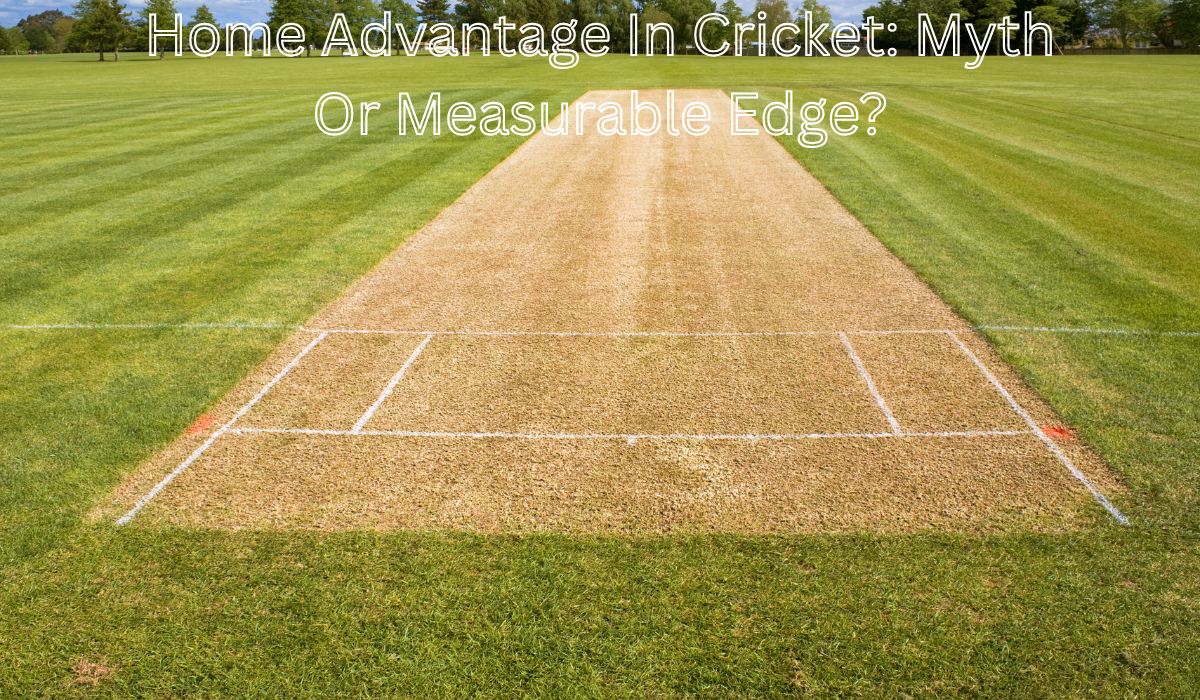
Home Advantage In Cricket: Myth Or Measurable Edge?
Cricket fans talk about home advantage like it is obvious. The crowd roars. The pitch behaves “our way.” The visiting team looks uneasy.
Sometimes it is real. Sometimes it is a story we tell after the fact.
To answer the question, you have to define home advantage in measurable terms. Wins and losses matter, but they are not enough. You also need to look at how teams win at home: scoring rates, wicket patterns, toss impact, and how conditions shift across venues.
Cricket is not played on a standard field. Each ground has its own boundary size, altitude, wind, and sightlines. Each pitch has its own pace, bounce, and spin. These physical details can create edges that feel like psychology but actually start in geography.
This article tests the idea of home advantage with clear mechanisms. We will separate myth from measurable effects and show where home advantage truly comes from.
Pitch Familiarity And Surface Preparation
The strongest home edge in cricket begins with the pitch.
Unlike many sports, cricket surfaces vary sharply. Some tracks crack and turn from day three. Others stay flat and reward fast scoring. Teams that prepare and study these surfaces gain early information.
Home boards influence pitch preparation within regulatory limits. They do not control outcomes, but they can shape conditions. A spin-heavy squad may prefer dry surfaces. A pace attack may benefit from grass cover and seam movement.
Familiarity compounds this edge. Home batters know where the ball grips. Bowlers understand which lengths extract bounce. Fielders judge outfield speed with precision.
This knowledge reduces uncertainty. Visiting players need overs to adapt. In short formats, those overs matter.
The effect shows in first-innings averages and bowling strike rates. Home teams often post stronger numbers because they read the surface faster.
Venue-specific data supports this pattern. Teams track scoring trends, pitch wear, and weather impact before matches. Analysts and fans who want to explore detailed ground reports and surface behaviour can read more about how venue conditions shape match flow and scoring dynamics.
Home advantage begins in the soil.
Crowd Influence And Decision Pressure
Noise changes rhythm.
A packed stadium does not add runs directly. It changes tempo. Fielders move faster. Bowlers rush into spells. Visiting batters feel each appeal amplify.
Umpires remain neutral, but research in many sports shows that crowd pressure can affect marginal calls. In cricket, those margins include lbw decisions and close catches. Over time, small percentages matter.
Home players also feed off familiarity. They know how the crowd reacts. They expect noise. Visiting sides face an environment that feels hostile or unfamiliar.
This psychological factor shows in early overs. Visiting teams often start cautiously. Dot-ball pressure builds faster when thousands react to each delivery.
The edge remains subtle. It does not guarantee victory. It slightly shifts probabilities in tight moments.
Crowd energy acts like wind behind a runner. It does not create strength. It adds momentum.
Travel Fatigue And Environmental Adjustment
Home advantage often hides in logistics.
Visiting teams cross time zones. They adjust to humidity, altitude, and local climate. Sleep cycles shift. Recovery windows shrink.
Cricket magnifies this effect because tours span weeks. A team arriving late faces adaptation lag. Reaction time slows. Concentration dips during long sessions in heat.
Data shows visiting teams concede more in the first match of a series, especially in extreme conditions. Subcontinental heat challenges northern sides. High-altitude venues affect swing and stamina.
Home squads train in those conditions year-round. They know how the ball behaves at sea level or above it. They understand how dew changes grip at night.
Fatigue also influences fielding. Late-session errors increase under travel strain. Small misfields extend partnerships. Over time, these details change match trajectory.
Home advantage is not only tactical. It is physiological.
Toss Impact And Format Differences
The toss carries more weight at certain venues.
In Test cricket, batting first on a deteriorating pitch offers protection. In T20 matches with heavy dew, chasing becomes easier because the ball skids under lights. These environmental patterns vary by ground.
Home teams understand these nuances better. They know when moisture evaporates. They know how the surface slows after forty overs. This knowledge informs toss decisions.
Statistical records show that at some stadiums, toss winners convert to match wins at higher rates than the global average. The effect depends on pitch behaviour and format.
Short formats amplify volatility. A single powerplay can swing outcome probability sharply. In Tests, structural strength usually outweighs toss advantage over five days.
Home advantage therefore interacts with format. It strengthens when conditions shift rapidly and weakens when skill dominates over time.
Understanding this requires venue-specific context. General assumptions rarely hold across all grounds.
Edge, Not Guarantee
Home advantage in cricket is real, but it is not magic.
It comes from pitch familiarity, environmental adaptation, crowd pressure, and travel fatigue. These factors shift probabilities. They do not rewrite skill gaps.
Strong visiting teams still win abroad. Elite batting travels. Fast bowlers succeed on unfamiliar soil. Over long series, quality asserts itself.
Yet in tight contests, small edges accumulate. A better read of surface wear. A sharper adjustment to humidity. A calmer response to noise. Each factor adds weight.
The measurable edge appears in statistics: slightly higher win percentages, stronger first-innings totals, marginally better bowling averages at home.
Home advantage is not a myth. It is a layered effect built from physical and psychological familiarity.
It does not guarantee victory. It tilts the field.
And in cricket, where matches often hinge on small margins, even a tilt matters.